
22 Apr What to Know for a Concrete Driveway in the Hill Country
If you own property in the Texas Hill Country, you already know that the land here doesn’t play by the same rules as a flat suburban lot. Rocky terrain, caliche soil, dramatic slopes, and unpredictable drainage make even a simple concrete driveway in the Hill Country, Texas a more involved project than it might be elsewhere. Done right, a concrete driveway is one of the most durable and low-maintenance investments you can make for your property. Done wrong, it cracks, heaves, and becomes an expensive problem within a few years.
This guide covers everything Hill Country homeowners need to know before hiring a contractor for concrete driveway work — including what drives cost, what questions to ask, and what makes the Hill Country environment different from anywhere else in Texas.
Why Concrete Driveways Are Different in the Texas Hill Country
The biggest factor is the ground itself. Central Texas soil is notoriously variable — you might have solid limestone rock a few inches down, or you might have expansive clay that shrinks and swells with moisture. The caliche layers common throughout this region can look stable but shift over time in ways that stress a concrete slab. Before any concrete is poured, a quality contractor needs to assess the subgrade conditions and prepare accordingly.
Slope is another variable. Many Hill Country properties have significant grade changes from the road to the home. A driveway on sloped terrain requires proper drainage design — cut-off drains, French drains, or carefully designed slopes — to prevent water from running across or pooling under the slab. Without that planning, erosion and slab movement are almost inevitable.
Finally, the Hill Country sees more weather extremes than many Texas regions — hard freezes in winter, intense summer heat, and occasional hail. Concrete here needs to be designed for thermal cycling, not just load-bearing.
Concrete Driveway Cost in the Texas Hill Country
For a standard residential driveway in the Hill Country, expect to pay $8–$18 per square foot depending on thickness, finish, and site conditions. Here’s what that looks like in practice:
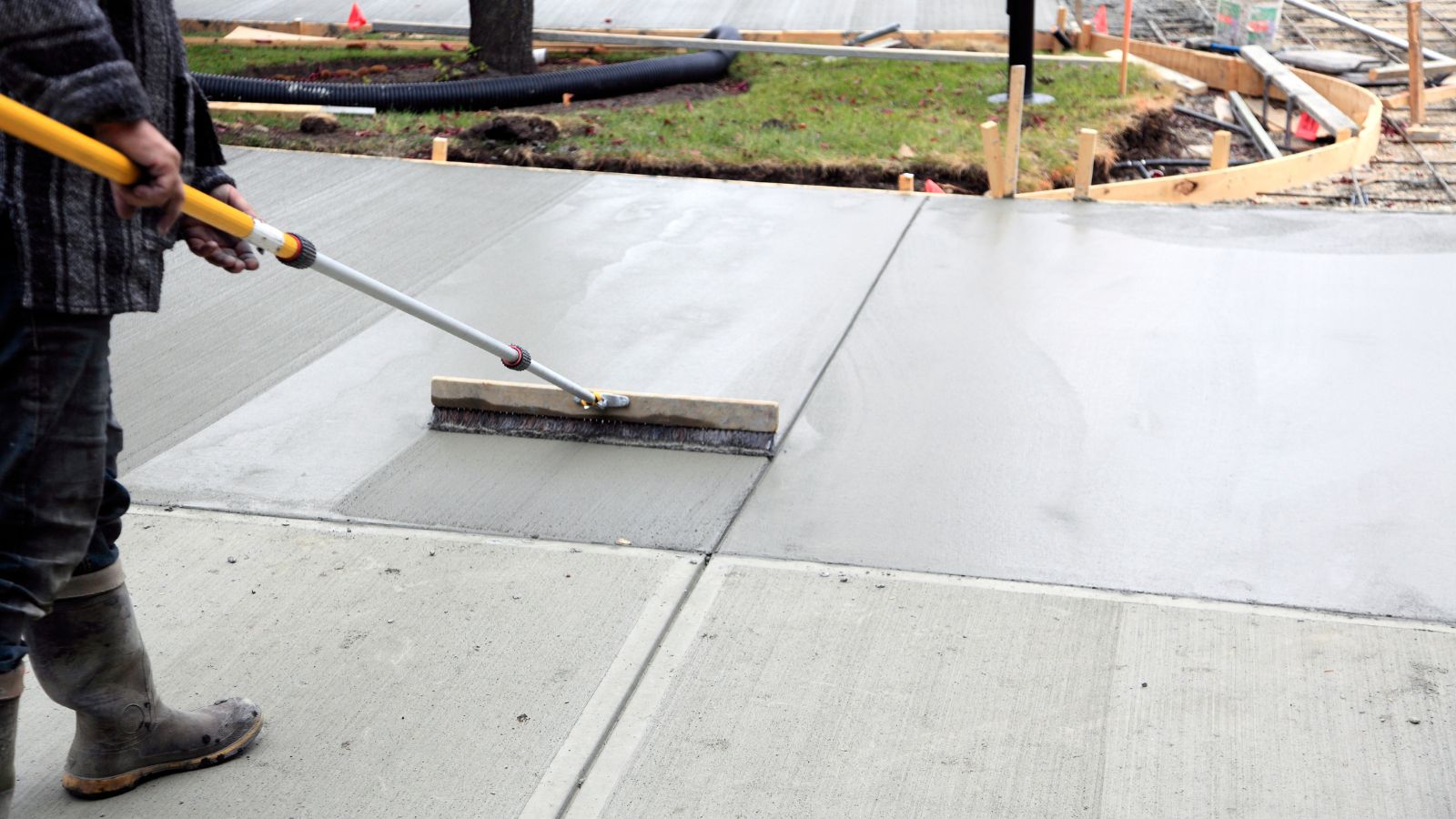
- Standard broom-finish concrete, flat site: $8–$12/sq ft
- Stamped or decorative concrete: $12–$18/sq ft
- Rocky or sloped site requiring significant prep: Add $2–$5/sq ft for excavation and base preparation
- Long rural driveways (200–500+ feet): Total cost can run $20,000–$60,000+ depending on length, terrain, and drainage requirements
One of the most common mistakes homeowners make is comparing bids without understanding what’s included in the base prep. Always ask what’s included in subgrade preparation, reinforcement (rebar vs. wire mesh vs. fiber), and drainage planning before accepting a bid.
Concrete vs. Asphalt vs. Gravel: Which Is Right for Hill Country Properties?
Concrete
Concrete is the most durable and lowest-maintenance option for Hill Country driveways. It handles the freeze-thaw cycles better than asphalt, looks more finished, and can last 30–50 years with basic maintenance. It has the highest upfront cost but the lowest long-term cost of ownership. For most permanent homes in the Hill Country, concrete is the right call.
Asphalt
Asphalt is cheaper upfront but softens in extreme Texas heat and requires regular sealing and maintenance. It’s more common in areas with colder climates where it performs better. For most Hill Country applications, concrete outperforms asphalt over the long run.
Caliche or Gravel
Gravel and caliche driveways are common on rural properties and acreage, and they’re the most affordable option for long rural drives. They require periodic regrading and topdressing but work well in many Hill Country applications — especially for properties where a full concrete drive would be cost-prohibitive. Some homeowners do a hybrid: concrete apron near the home or garage, caliche for the long rural run to the road.
According to the U.S. Department of Energy, permeable surfaces like gravel also help with stormwater management on rural properties — something to factor in if your land has drainage challenges.
Stamped and Decorative Concrete Options
Beyond basic driveways, decorative concrete has become increasingly popular in the Hill Country for its ability to mimic natural stone, brick, or tile at a fraction of the cost of the real materials. Stamped concrete can be designed to complement the limestone and cedar aesthetic that defines Hill Country architecture. Popular applications include:
- Stamped concrete driveways with flagstone or cobblestone patterns
- Colored concrete to complement the home’s exterior palette
- Exposed aggregate finishes for a natural, textured look
- Concrete borders or aprons around gravel driveways
Our team handles all of this in-house as part of our masonry and concrete services. If you’ve seen decorative concrete work you love and want something similar, bring us a photo and we’ll work from there.
What Else Can Be Done With Concrete on Your Property?
Most Hill Country homeowners who are investing in a new or repaired driveway also take the opportunity to address related concrete work at the same time — parking pads, garage aprons, walkways, and patio slabs. Combining this work saves on mobilization costs and ensures consistent materials and finish across your property.
Concrete also plays a key role in outdoor entertainment spaces. If you’re considering an outdoor kitchen, fire pit area, or covered patio, a proper concrete slab foundation is the starting point. See our outdoor living improvement guide for ideas on how to tie your driveway and patio projects together into a cohesive property plan.
Retaining Walls and Drainage: The Overlooked Part of Driveway Projects
On sloped Hill Country lots, a driveway project often needs to include a retaining wall to manage grade changes, prevent erosion, and direct stormwater away from the slab and the home. Limestone or concrete block retaining walls are standard in this region and can double as attractive landscape features when done well.
Drainage planning is equally important. The USGS Texas Water Science Center documents the drainage and flood characteristics of Hill Country watersheds — which are among the flashiest in the country, meaning water moves fast and hard after a rain event. Your driveway design needs to account for that.
A general contractor who also handles masonry and retaining walls — like CMW — can plan and build the driveway, drainage, and wall work as a single integrated project. That matters on a sloped Hill Country site where all three components interact with each other.
How to Hire a Concrete Contractor in the Hill Country
The Hill Country has no shortage of contractors, but concrete work is one area where you really want to vet your choice carefully. Here’s what to look for:
- Local experience: A contractor who has worked in Hill Country soil and terrain conditions understands the variables. This isn’t a market for generic concrete crews from out of the area.
- Subgrade preparation process: Ask specifically how they prepare the base. The answer tells you a lot about the quality of the final product.
- Reinforcement approach: For Hill Country conditions, rebar-reinforced concrete is generally worth the added cost over wire mesh alone.
- Drainage plan: Any contractor working on a sloped site should have a specific plan for water management.
- References and photos: Ask to see comparable projects they’ve done in the area.
For a broader look at how to evaluate and hire the right contractor for any project on your property, see our complete guide to choosing the right Hill Country contractor.
Frequently Asked Questions
How thick should a concrete driveway be in Texas?
For residential driveways in the Hill Country, 4 inches is the standard minimum. For driveways that will see heavy vehicle traffic — trucks, equipment, or RVs — 5–6 inches is recommended. The extra cost of added thickness is almost always worth it on sites with challenging soil conditions.
How long does it take to pour a concrete driveway?
The pour itself is typically done in a day. Cure time before foot traffic is 24–48 hours; before vehicle traffic, plan on 7 days minimum. Full cure to maximum strength takes 28 days.
Does CMW do concrete work in Spring Branch and Bulverde?
Yes. Spring Branch is our home base and we do concrete driveways, patios, retaining walls, and masonry work throughout the surrounding Hill Country communities.
Can you repair an existing cracked driveway instead of replacing it?
Sometimes — it depends on the extent of the damage and the condition of the subbase. Surface cracks can often be filled and sealed. If the slab has heaved or the subbase has failed, full replacement is usually more cost-effective than repeated patch repairs. We’ll give you an honest assessment during the consultation.
Get a Concrete Estimate for Your Hill Country Property
CMW General Contractors handles driveways, retaining walls, patios, and all types of masonry work throughout the Texas Hill Country. If you’re ready to plan your project, contact our team to schedule a site visit and get an accurate estimate based on your specific property and goals.